
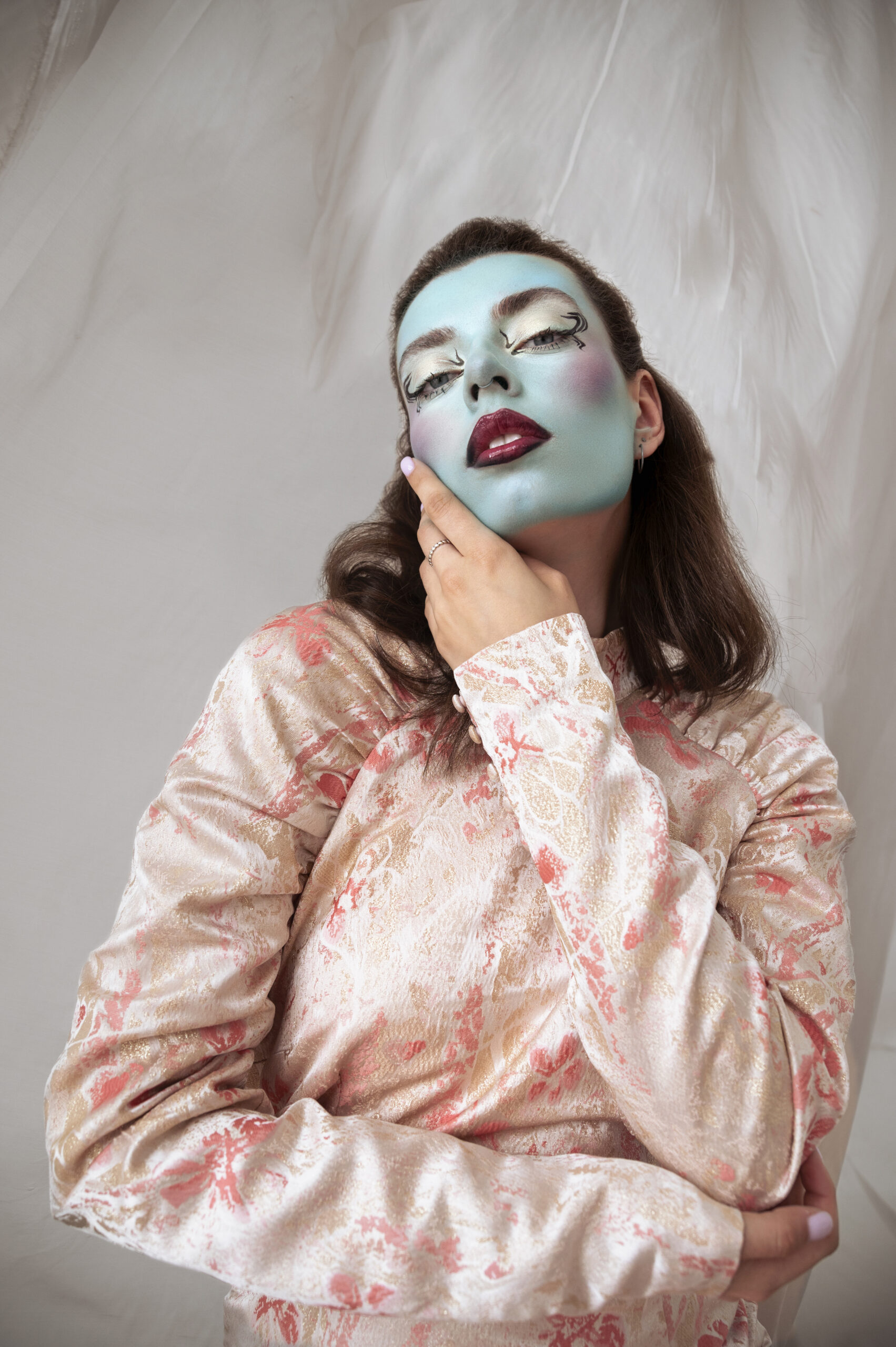
When I wrote about masking recently, a friend messaged me saying, “I don’t even know when I’m doing it.” That makes sense.
Masking is rarely a conscious decision. We don’t tend to say to ourselves “right, I’m going to abandon myself so others feel comfortable.” It’s much more subtle than that. It’s often the nervous system saying “who do I need to be to stay safe right now”?
Over 30 years ago when I met my best friend I was a vegetarian. Not for any particular reason other than the fact I didn’t particularly like meat.
But within 24 hours of meeting her, I was eating a burger. A full, proper, meat-filled burger.
We still laugh about it now. At the time, it felt spontaneous and funny – like I’d just decided to “live a little.” The story became one of those stories you tell over a few drinks “I was a vegetarian until I met her…”
But what I understand now, with everything I know about the nervous system, is very different. My body wasn’t thinking about protein or principles, it was scanning for belonging.
Here I was, in a new friendship with a new social circle and my nervous system (unbeknown to me) was asking “Who do I need to be to fit in here?”
The nervous system is wired for connection. Historically, belonging meant survival and rejection meant danger. So when we enter a new workplace, a friendship group or a relationship the body instinctively assesses the environment.
Am I safe here? What’s rewarded? What’s rejected?
Sometimes that means we soften our opinions, or suppress our needs. Sometimes we laugh at jokes that don’t feel funny. And sometimes, apparently, we eat burgers.
Masking often begins in moments exactly like that – small adjustments that help us feel included. The body learns “when I adapt I stay connected and safe”.
The challenge is when adaptation becomes identity.
If, over time, we repeatedly override our preferences, emotions, values or boundaries in order to maintain belonging, the body begins to live in a subtle state of bracing. We monitor, we edit and we anticipate.
And eventually we forget what was truly us and what was performance.
In my case, eating that burger didn’t cause trauma. It didn’t unravel my sense of self. It’s a funny memory wrapped inside a beautiful friendship.
But it is a perfect, human example of how quickly we adjust in the presence of potential belonging.
Now imagine that same mechanism in environments that aren’t light-hearted.
A child who learns that big emotions lead to rejection. Or an employee who learns that speaking up leads to criticism. Or a partner who learns that needs are labelled “too much.”
The nervous system does what it’s designed to do, it protects. And if authenticity has historically led to disconnection, the system will choose adaptation every time.
This is why authenticity can feel threatening – even when we intellectually crave it. When the mask slips, anxiety rises because an old survival pattern is being challenged and the body remembers what the mind has rationalised away.
The work isn’t about ripping the mask off dramatically. That can retraumatise the system. The work is about gently building evidence that it’s safe to be more of who you are.
It might start with something small like expressing a preference and saying “actually, I’m not in the mood for that”. Letting someone see you’re disappointed or keeping your vegetarianism!
Each time nothing bad happens, the nervous system updates its data. The threat level lowers and the body softens.
Belonging that requires self-abandonment is conditional. Belonging that allows authenticity is secure.
And here’s what’s beautiful – my best friend would have liked me whether I ate the burger or not. The connection was real and the adaptation wasn’t necessary.
And what I’m coming to realise is that is often the case. The people who truly care for us don’t require performance. They don’t need us to edit our truth to stay connected. In fact, authenticity deepens intimacy. When we’re known for who we really are, relationships deepen.
Masking once helped us survive but awareness helps us choose.
With love as always.
Sarah xx
0 Comments